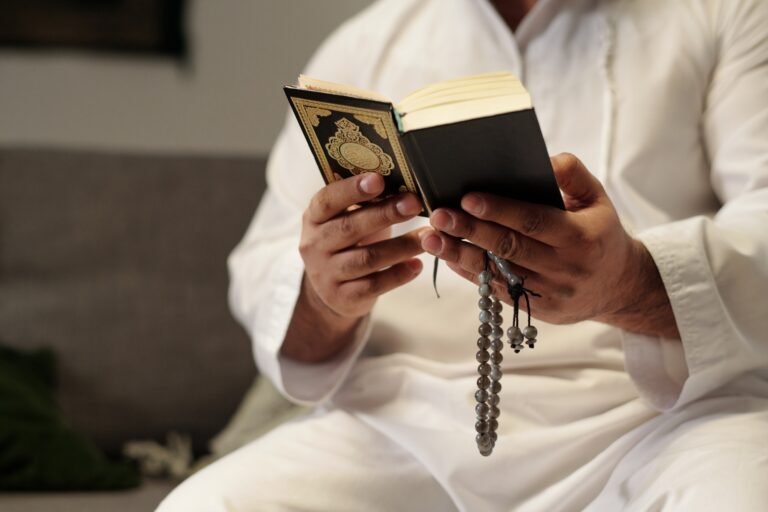

Common Tajweed Mistakes Beginners Make
common Tajweed mistakes Every beginner makes Tajweed mistakes when learning to recite the Quran, and that is completely normal. Even skilled reciters spent months correcting their pronunciation before their recitation became smooth. The encouraging news is that the common Tajweed mistakes beginners make are well known, which means they are also easy to recognize and easy to fix once you know what to listen for.
In this guide, we will not repeat the basics of Tajweed. If you want a full introduction to the rules, start with our guide on what is Tajweed. Here, we focus on something different: the seven most frequent Tajweed mistakes, how to hear them in your own recitation, and a simple fix and practice drill for each one.
Think of this article as a friendly checklist. Read one mistake at a time, try the drill out loud, and celebrate every improvement, however small.
| What You Will Learn in This Guide
Why Tajweed mistakes happen and why they are nothing to fear • 7 common Tajweed mistakes with examples and fixes • Three habits that quietly cause Tajweed mistakes • How to find your own Tajweed mistakes • A 4-week plan to correct them • Answers to the 10 most-asked questions |
| Related Article: What Is Tajweed?
New to the rules? Read the complete beginner’s guide first, then come back here to polish your recitation. |
Why Common Tajweed Mistakes Happen to Every Beginner
Understanding why Tajweed mistakes happen takes away the worry. You are not failing; you are learning a new physical skill.
Your Mouth Is Learning New Sounds
Arabic has sounds that do not exist in many other languages, such as the deep throat letters and the heavy letters. Your tongue and throat need time and repetition to learn them, exactly like learning a musical instrument.
You Cannot Always Hear Your Own Mistakes
When you recite, you hear the sound you intended, not always the sound you produced. That is why a teacher or a recording is so valuable in finding Tajweed mistakes you cannot notice alone.
Habits Form Quickly
Tajweed mistakes repeated for weeks become habits, and habits are harder to change later. The earlier you correct common Tajweed mistakes, the easier the fix becomes.
| Why This Matters
Scholars distinguish between major Tajweed mistakes that change a letter, a vowel or the meaning, and minor Tajweed mistakes in finer details. The Prophet ﷺ also gave great hope to those who struggle with recitation (Sahih al-Bukhari 4937). So correct your Tajweed mistakes with patience, never with despair. |
7 Common Tajweed Mistakes and How to Fix Each One
Here are the seven most frequent Tajweed mistakes, with a clear example and a practice fix for each.
Common Tajweed Mistake 1: Confusing Letters That Sound Similar
This is the most frequent of all Tajweed mistakes. Several Arabic letters sound alike to ears used to other languages, so beginners swap them without noticing.
| Pair | Example | Why it matters |
| ء and ع | أَمَل (hope) and عَمَل (deed) | Different meanings |
| ق and ك | قَالَ (he said) and كَالَ (he measured) | Different meanings |
| ض and ظ | ضَلَّ (went astray) and ظَلَّ (remained) | Different meanings |
| ص and س | صَدَّ (turned away) and سَدَّ (blocked) | Different meanings |
| ح and هـ | الْحَمْدُ heard as “al-hamd” with a light h | Wrong sound |
| ث and س | ثَلَاثَة heard as “salasa” | Wrong sound |
The fix: Learn where each letter is produced, then practice the pair side by side. Say the first letter slowly, then the second, and feel where your tongue and throat move. Ask a teacher to listen to you read each pair, because your ears need an expert example.
| Practical Tip: Record Letter Pairs
Record yourself reading three pairs each day, then listen to a trusted reciter saying the same words. Spotting the difference between your recording and theirs is the fastest training for your ears. |
Common Tajweed Mistake 2: Changing the Short Vowels
Short vowels (fatha, kasra and damma) can change the meaning completely. A famous example is in Surah Al-Fatihah: أَنْعَمْتَ (an‘amta) means “You have favored,” addressing Allah. If the last letter is read with a damma, it becomes أَنْعَمْتُ (an‘amtu), “I have favored,” which is a different meaning.
The fix: Slow down on the final vowel of each word and make each one clear. Recite Surah Al-Fatihah once a day while looking at each vowel mark, and let a teacher check the endings of the words.
Common Tajweed Mistake 3: Shortening or Over-Stretching the Madd
Beginners often shorten every stretch to the same length, or stretch randomly for dramatic effect. Both are common Tajweed mistakes. The natural madd in قَالَ needs about two counts, no less and no more. For the full explanation of the four types of madd, see rule five in our guide to what is Tajweed.
The fix: Tap your finger twice on the table while stretching a natural madd. Then try four taps for a connected madd and six for a necessary madd, so that your stretches become measured and consistent.
| Common Error: Stretching Where No Madd Exists
Some beginners stretch a short vowel because it sounds more beautiful. Beauty in Tajweed comes from accuracy, so keep short vowels short and long vowels long. |
Common Tajweed Mistake 4: Skipping or Overdoing Ghunnah
Ghunnah is the gentle nasal sound that appears on a noon or meem with a shaddah. Beginners either skip it completely or push it too hard through the nose. Words such as إِنَّ and ثُمَّ need a steady, soft hum for about two counts.
The fix: Gently close your nose while saying the sound. If the sound disappears, you are using the nose correctly; if it stays unchanged, you are not. Then release your nose and keep the same soft hum.
Common Tajweed Mistake 5: Ignoring Qalqalah or Adding a Vowel to It
Qalqalah is the light echo on the letters ق ط ب ج د when they carry a sukoon. Two Tajweed mistakes appear here: reciting the letter flatly with no echo, or bouncing so strongly that a short vowel is added, such as “ahada” instead of a clean “ahad” in أَحَدٌ.
The fix: Practice with وَتَبَّ at the end of Surah Al-Masad. Stop on the ba and let a small, quick echo release without any vowel. Listen carefully to a teacher’s example, then copy it.
Common Tajweed Mistake 6: Mixing Heavy and Light Letters
Heavy letters are pronounced with a full, rounded mouth, and light letters are thin. Beginners often make everything light, which turns ص into س, or make everything heavy, which loses the softness of the light letters.
The letter ر is a good test. It is heavy in رَبِّ and light in فِرْعَوْنَ. In the same way, the lam in the name of Allah is heavy in قَالَ اللَّهُ and light in بِسْمِ اللَّهِ.
The fix: Say a heavy letter, then its light partner, and watch your mouth in a mirror. For heavy letters the tongue rises toward the roof of the mouth, and for light letters it stays low and relaxed.
Common Tajweed Mistake 7: Stopping and Starting in the Wrong Places
Stopping in the wrong place can even change the meaning. For example, in Surah An-Nisa (4:43), stopping after لَا تَقْرَبُوا الصَّلَاةَ gives the meaning “do not approach the prayer,” while the verse continues with the condition that completes the meaning. Beginners also make smaller Tajweed mistakes when stopping, such as pronouncing the final vowel, for example saying “rahmatun” instead of “rahmah” for رَحْمَةٌ.
The fix: Stop only at the end of a verse until you learn the stop signs. When you stop, drop the final vowel and end with a clean sukoon. Learn one new stop sign a week with your teacher.
See also: Learn Quran with Tajweed Step by Step
Tajweed Mistakes in Prayer: What to Focus on First
Most of us recite the Quran in prayer more than anywhere else, so correcting Tajweed mistakes in the surahs you recite in salah gives the biggest reward for your effort. Begin with Surah Al-Fatihah, because you recite it in every unit of prayer, and then move to the short surahs. Check the endings of words, the stretches and the letters that are easy to confuse. Fixing Tajweed mistakes in the words you repeat daily makes your prayer calmer, clearer and more focused. Once Al-Fatihah feels secure, add one short surah at a time, and review it with your teacher until the Tajweed mistakes in it are gone.
Severity at a Glance: Which Tajweed Mistakes Matter Most?
Not every Tajweed mistake carries the same weight. This table gives a general guide, and your teacher can advise you on your own recitation.
| Mistake | Generally | Your first step |
| Swapping letters | Major, changes sounds or meaning | Practice letter pairs |
| Changing vowels | Major, can change meaning | Slow down on endings |
| Madd length | Usually minor | Count with finger taps |
| Ghunnah | Usually minor | Use the nose test |
| Qalqalah | Usually minor | Drill with a small echo |
| Heavy and light letters | Minor, but major if a letter changes | Mirror practice |
| Wrong stops | Can affect meaning | Stop at verse ends |
Common Tajweed Mistakes by Age: Kids, Teens and Adults
Tajweed Mistakes in Children
Children usually make Tajweed mistakes with letters that sound alike, and they often rush. Short, playful practice and gentle repetition fix most of these Tajweed mistakes quickly, because children imitate sounds naturally.
Tajweed Mistakes in Teenagers
Teenagers tend to read fast to keep up with others, which hides Tajweed mistakes. Encourage them to slow down and record themselves, since hearing their own Tajweed mistakes helps them take ownership of the improvement.
Tajweed Mistakes in Adults
Adults often carry the sounds of their first language into Arabic, so the throat letters and heavy letters cause the most Tajweed mistakes. Patient drills and regular feedback help adults replace old habits with new ones.
Tajweed Mistakes in New Muslims
New Muslims are usually starting from the letters, so their Tajweed mistakes are natural and temporary. A warm teacher and a slow plan, such as our guide for new Muslims, turn these Tajweed mistakes into progress.
3 Habits That Quietly Cause Tajweed Mistakes
Habit 1: Reciting Too Fast
Speed hides Tajweed mistakes. When you rush, you skip stretches, echoes and nasal sounds. Slow down, because the Quran encourages measured recitation, and fluency follows accuracy.
Habit 2: Practicing Without Feedback
Practicing alone is helpful, but it can repeat the same Tajweed mistakes again and again. Regular feedback from a qualified teacher breaks the cycle. Learn why in our article on an Al-Azhar certified Quran teacher.
Habit 3: Memorizing Before Reading Accurately
Memorizing a verse with Tajweed mistakes locks them into memory. Make sure your reading is accurate first, then begin memorizing, using a plan such as our Quran memorization plan for kids or our memorization schedule for adults.
How to Find Your Own Common Tajweed Mistakes
Step 1: Record Your Recitation
Record two or three minutes of a surah you know well. Listening to yourself is the most honest way to spot Tajweed mistakes.
Step 2: Compare with a Trusted Reciter
Play a slow, clear recitation of the same passage and compare it with yours, word by word.
Step 3: Keep a Mistake Log
Write each of your Tajweed mistakes in a small notebook with the word and the fix. A log turns scattered corrections into a clear plan.
Step 4: Ask a Teacher to Listen
A teacher hears what you cannot, and can tell you which Tajweed mistakes to fix first. Our free trial Quran class is a gentle way to begin.
How a Teacher Corrects Tajweed Mistakes Step by Step
Listening Carefully First
A good teacher listens to your whole recitation before correcting anything, so that the most important Tajweed mistakes are chosen first, not every small slip at once.
Modeling the Correct Sound
The teacher recites the word correctly, and you repeat it. Hearing the right sound is the fastest way to fix Tajweed mistakes in pronunciation.
Repeating Until It Feels Natural
Repetition turns a corrected sound into a habit. Teachers usually give a short drill so that the correction for each of your Tajweed mistakes continues at home.
Encouraging Every Improvement
Positive feedback keeps you motivated. A kind teacher celebrates each corrected mistake, so that learning Tajweed stays joyful.
5-Minute Daily Drills to Prevent Tajweed Mistakes
Prevention is easier than correction. These short drills help you prevent Tajweed mistakes before they become habits.
Drill 1: Letter Pair Warm-Up
Read two letter pairs aloud to avoid Tajweed mistakes with similar sounds.
Drill 2: Slow Recitation of One Verse
Recite one verse slowly, because slow reading reveals hidden Tajweed mistakes.
Drill 3: Finger-Tap Counting
Count your stretches with finger taps to avoid Tajweed mistakes in madd and ghunnah.
Drill 4: Record and Replay
Record yourself, replay it and write down any Tajweed mistakes you hear.
Drill 5: Weekly Teacher Check
Share your recording with your teacher each week so that Tajweed mistakes are caught early. Practicing these drills for a few minutes every day is the simplest way to stay free of repeated Tajweed mistakes and to build lasting accuracy.
A 4-Week Plan to Fix Common Tajweed Mistakes
| Week | Focus | Daily practice (10 minutes) |
| 1 | Letters and vowels | Three letter pairs and Surah Al-Fatihah endings |
| 2 | Madd and ghunnah | Finger-tap counting and humming drills |
| 3 | Qalqalah and heavy letters | Echo drill and mirror practice |
| 4 | Stopping and review | Stop at verse ends and re-record |
At the end of four weeks, record yourself again and compare. Celebrate every improvement you hear, because those improvements are the proof that your effort is working.
Fix Your Tajweed Mistakes with the Right Course at Quran Window Academy
Self-practice is a wonderful start, and a teacher helps you go further. Choose the path that suits you.
For Adults: Quran Recitation for Adults
Correct your recitation with personal feedback in every lesson. For a service-focused option, see our Tajweed classes for adults.
| Quran Recitation for Adults
One-to-one lessons • Al-Azhar certified teachers • Real-time correction • Flexible schedule • Free trial class available |
For Children: Quran Recitation for Kids
Help your child build correct habits from the first lesson. See also our guide to learning Tajweed online for kids.
| Quran Recitation for Kids
Child-friendly teaching • Al-Azhar certified teachers • Short, engaging sessions • Free trial class available |
For Memorizers: Quran Memorization Courses
Memorize with correct pronunciation from the start. Choose Quran Memorization for Adults or Quran Memorization for Kids.
For Understanding: Master Arabic in 90 Days
Understand what you recite and notice letters and words more clearly.
| Master Arabic in 90 Days
Structured Arabic learning • Understand what you recite • Guided by experienced teachers |
You can also browse all courses, review our fees or explore Islamic Studies Courses.
Continue Your Tajweed Journey: Related Articles
| Article: What Is Tajweed?
The complete beginner’s guide to the rules behind everything you practiced today. |
| Article: Quran for Beginners
A warm, step-by-step start for new readers of any age. |
Common Tajweed Mistakes FAQs: 10 Most Asked Questions
What are the most common Tajweed mistakes?
The most common are confusing similar letters, changing short vowels, shortening or over-stretching madd, skipping ghunnah, mishandling qalqalah, mixing heavy and light letters, and stopping in the wrong place.
What is the most common mistake in Quran recitation?
Confusing letters that sound alike is usually the most common, especially the throat letters and the pairs such as ض and ظ.
What are the types of Tajweed mistakes?
Scholars divide them into major Tajweed mistakes (laḥn jalī), which change a letter, vowel or meaning, and minor Tajweed mistakes (laḥn khafī), which affect finer details such as the length of a nasal sound.
Are Tajweed mistakes a sin?
This is a question for a qualified scholar. In general, scholars treat a sincere learner who is striving to improve very gently, while encouraging everyone to keep learning and correcting.
Is my prayer valid if I make Tajweed mistakes?
Scholars discuss this in detail, and rulings consider the type of mistake and your effort to learn. Ask a trusted scholar about your situation, and keep improving with a teacher.
How can I correct my Tajweed mistakes?
Record yourself, compare with a trusted reciter, keep a mistake log, practice short daily drills and recite regularly to a qualified teacher.
Can I fix Tajweed mistakes on my own?
You can improve a lot with recordings and daily practice, but a teacher is the best way to catch Tajweed mistakes you cannot hear yourself.
How long does it take to fix Tajweed mistakes?
It depends on the mistake and your practice. Many learners notice clear improvement within a few weeks of focused daily drills, while full polishing continues over months.
What are the most common mistakes with makharij?
Swapping ء with ع, ح with هـ, ق with ك and ث with س. A teacher can correct these quickly.
Do I need a teacher to correct Tajweed mistakes?
A teacher is strongly recommended. Tajweed is a spoken skill, and live feedback is the quickest way to correct Tajweed mistakes. Start with a free trial class to see how it feels.
Begin Fixing Your Common Tajweed Mistakes Today
Common Tajweed mistakes are not a sign that you are behind. They are a sign that you are learning. With small daily drills, honest listening and a patient teacher, each mistake becomes a step toward beautiful, accurate recitation.
Celebrate every verse you recite more clearly than yesterday, and remember the guidance of the Prophet ﷺ that the most beloved deeds to Allah are the most consistent ones, even if they are small.
At Quran Window Academy, we would be happy to guide you. Book your free trial class today and hear the difference that personal correction makes from your very first lesson.
| Start Your Free Trial Class
Correct your Tajweed with a certified Al-Azhar teacher at Quran Window Academy. Available for adults and children. Visit: quranwindow.com/contact-us |