

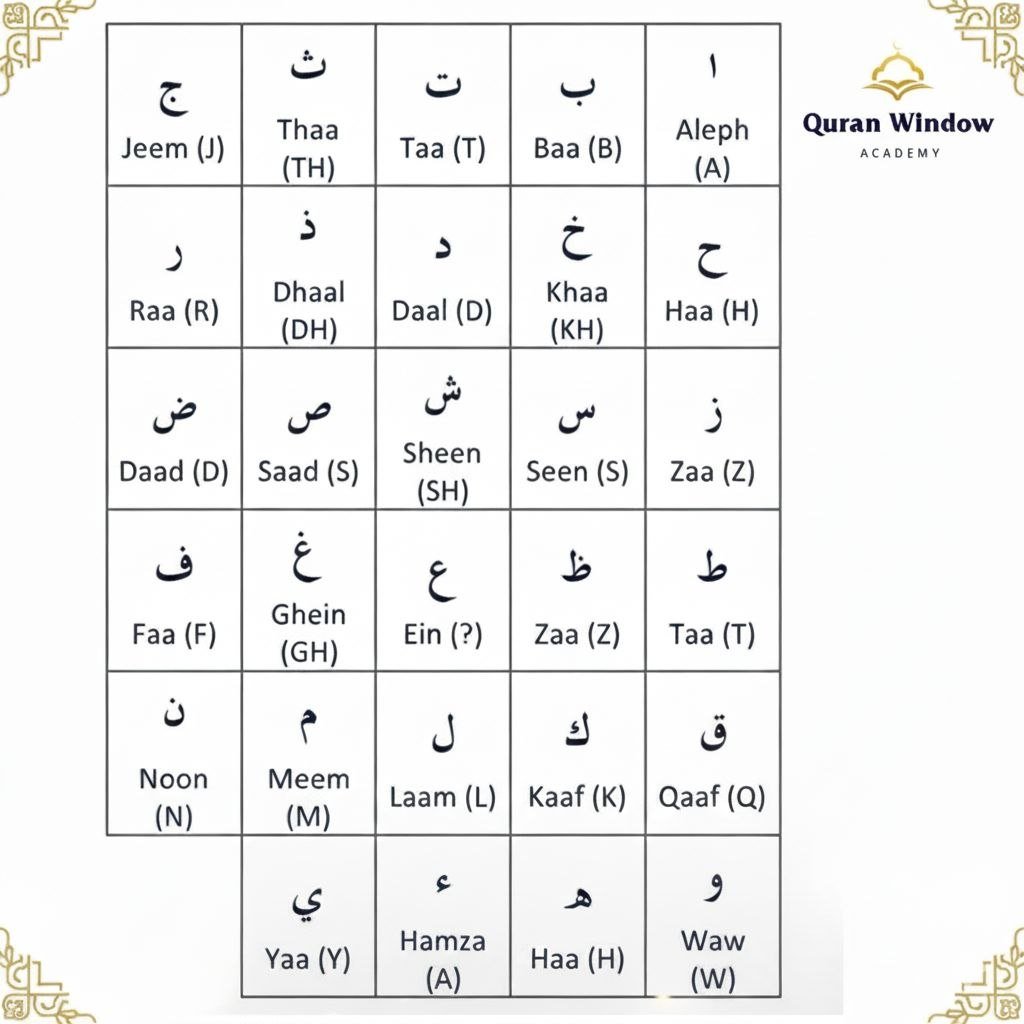
Arabic Alphabet in English
Arabic Alphabet in English
Why Learning Arabic Starts with the Arabic Alphabet in English
Learning Arabic may feel challenging at first. However, with the right system, it becomes enjoyable, structured, and deeply rewarding. That is exactly why Master Arabic in 90 Days was designed. This course begins with the most important foundation: Arabic Alphabet in English. By learning the Arabic alphabet through English explanations, beginners can progress faster, avoid confusion, and build confidence from day one.
In today’s global world, Arabic is no longer optional. It is the language of the Qur’an, spoken by over 400 million people, and essential for understanding Islamic studies, Middle Eastern culture, and modern communication. Therefore, mastering Arabic within a clear time frame is a powerful personal investment.
What Is the Arabic Alphabet in English and Why It Matters
The Arabic Alphabet in English refers to learning Arabic letters using English transliteration and explanations. This method helps beginners recognize sounds, shapes, and pronunciation before fully transitioning into Arabic reading.
The Problem with Traditional Arabic Learning
Many learners quit Arabic early because:
Letters look unfamiliar
Sounds feel difficult
Teaching methods move too fast
As a result, learners feel overwhelmed.
How Arabic Alphabet in English Solves This
By using the Arabic Alphabet in English, students:
Understand pronunciation clearly
Connect sounds with familiar English letters
Learn step by step without pressure
This approach builds a strong foundation that lasts.
9 Powerful Benefits of Learning Arabic Alphabet in English
1. Faster Understanding for Beginners
When Arabic letters are explained in English, comprehension becomes immediate. Students know exactly how to pronounce each letter.
2. Strong Pronunciation from Day One
Arabic pronunciation is unique. Learning through Arabic Alphabet in English prevents common mistakes early.
3. Smooth Transition to Reading Arabic Texts
Once learners understand letters and sounds, reading becomes natural instead of stressful.
4. Ideal for Non-Native Speakers
This method is designed specifically for English speakers who want clarity and structure.
5. Confidence Boost
Understanding letters clearly builds confidence and motivation.
6. Perfect for Quranic Arabic
Arabic Alphabet in English helps learners read Qur’anic words correctly.
7. Memory-Friendly Learning
English-based explanations improve long-term memory.
8. Less Frustration, More Progress
Students feel encouraged rather than confused.
9. Faster Results in 90 Days
With consistency, learners achieve real results within a short time.
Inside the Master Arabic in 90 Days Course
The Master Arabic in 90 Days course is carefully structured to take learners from zero to confident readers.
Phase One – Arabic Alphabet in English (Days 1–30)
Arabic letters with English pronunciation
Letter shapes (initial, medial, final)
Common mistakes explained in English
Phase Two – Word Formation (Days 31–60)
Joining letters
Reading simple words
Applying Arabic Alphabet in English naturally
Phase Three – Reading & Understanding (Days 61–90)
Reading sentences
Quranic examples
Everyday Arabic vocabulary
Why This Course Is Different from Others
Many Arabic courses fail because they ignore beginners’ needs. In contrast, Master Arabic in 90 Days focuses on clarity, simplicity, and progress.
English-Based Teaching Style
Every lesson explains the Arabic Alphabet in English clearly.
Step-by-Step System
No jumping ahead. Each lesson builds on the previous one.
Practical Application
Learners read, pronounce, and understand Arabic daily.
Who Is This Course For?
This course is ideal for:
Absolute beginners
Muslims wanting to read Qur’an
English speakers interested in Arabic
Parents teaching their children
Islamic studies students
Arabic Alphabet in English for Quran Reading
One of the strongest advantages of learning the Arabic Alphabet in English is the ability to read the Qur’an correctly and confidently.
Correct Pronunciation (Makharij)
Through the Arabic Alphabet in English, learners understand where each letter comes from and how it should sound.
Reading Without Fear
When learners recognize letters clearly, they approach the Qur’an with confidence.
Building a Spiritual Connection
Understanding letters leads to better recitation and stronger focus.
How Arabic Alphabet in English Accelerates Learning
Clear Sound-to-Letter Mapping
Each Arabic letter is linked to a familiar English sound explanation.
Repetition with Understanding
Repetition becomes meaningful when learners know what they repeat.
Logical Learning Path
The course follows a structured system that builds skills gradually.
Common Mistakes Beginners Make (And How This Course Fixes Them)
Skipping the Arabic Alphabet
This course prioritizes Arabic Alphabet in English first.
Memorizing Without Understanding
Learners understand before memorizing.
Inconsistent Practice
The 90-day plan ensures consistency.
Why 90 Days Is the Perfect Time Frame
Daily Micro-Lessons
Short lessons prevent burnout.
Weekly Progress Checks
Learners track improvement clearly.
Long-Term Retention
Skills remain strong after completion.
Final Call to Action – Start Mastering Arabic Today
If you want to learn Arabic correctly, start with the right foundation. Master Arabic in 90 Days begins with Arabic Alphabet in English.
Enroll today and transform your Arabic journey with clarity, confidence, and proven results.






3 Comments